Why cold fermentation makes better sourdough bread
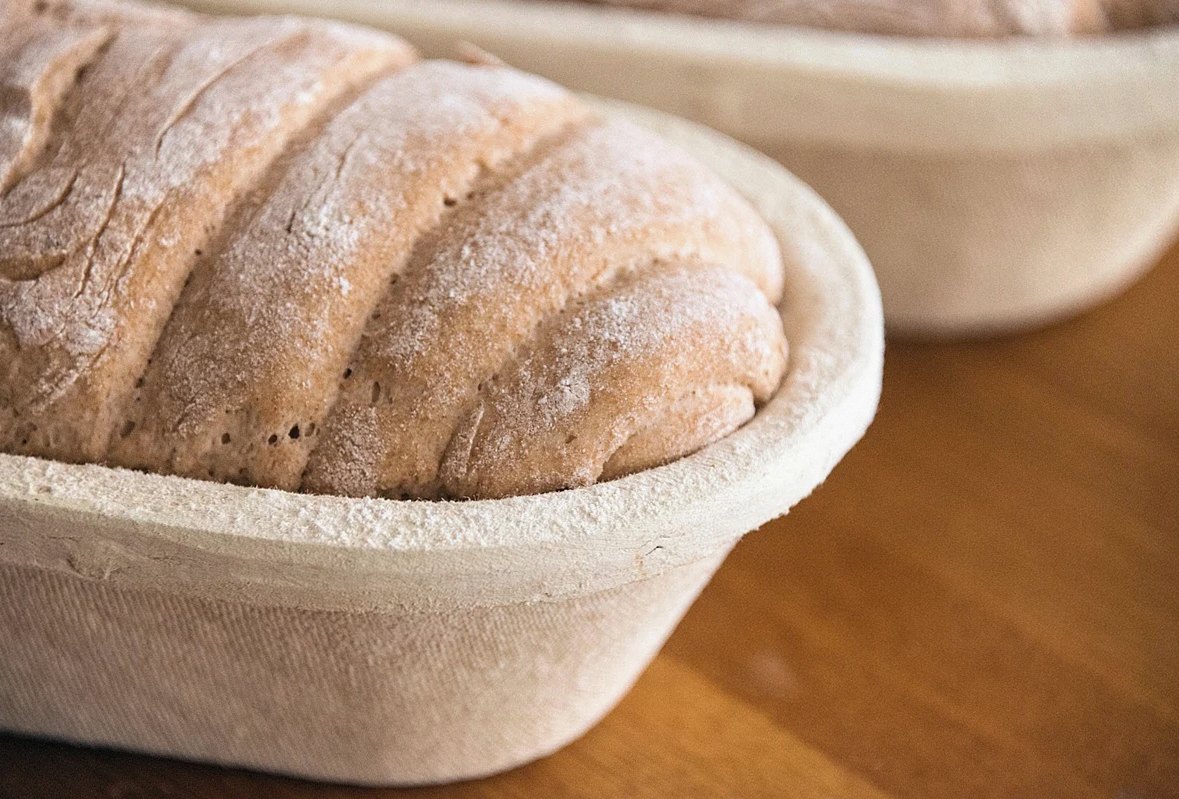
Most sourdough guides tell you to proof your dough at room temperature until it doubles. That works. But if you have ever tasted a loaf that spent the night in the refrigerator before baking, you will notice the difference immediately. The crust is deeper, the crumb is more complex, and the sourness is present without being sharp. Cold fermentation is not a shortcut or a trick. It is a different process with different results, and understanding why it works will change how you bake.
What happens to dough in the cold
When you put shaped dough into a refrigerator at around 4 degrees Celsius, fermentation does not stop. It slows dramatically. The yeast activity drops to a fraction of its room-temperature rate, but the bacteria in the starter continue working at a relatively higher proportion. Those bacteria produce the organic acids. Lactic and acetic. That give sourdough its flavour. A long, cold proof gives them time to do their work without the yeast overproofing the dough.
The result is a dough that is more extensible when it comes out of the refrigerator, easier to score, and more resistant to spreading in the oven. The cold also firms the butter in enriched doughs, which is why croissants and brioche benefit from overnight chilling before baking.
Japanese kitchens and cold proofing
Japanese home refrigerators tend to run slightly colder than European models, typically between 2 and 5 degrees Celsius in the main compartment. This is actually ideal for sourdough cold proofing. The dough moves slowly and develops flavour over 12 to 20 hours without the risk of overproofing that you get in a warmer refrigerator.
One practical consideration: Japanese refrigerators are often compact, and a proofing basket takes up significant shelf space. A round banneton fits neatly on a standard shelf. If you are proofing a batard, you may need to rearrange. We recommend proofing in a covered bowl if space is tight. The results are slightly less structured but still good.
How long is long enough
At Hulk CoreVault, our minimum cold ferment is 18 hours. The country miche typically goes 20 hours. We have pushed to 36 hours on test batches and found that the flavour becomes very assertive. Good for some people, too much for others.
For home bakers, 12 hours is a reasonable starting point. 16 to 20 hours is where most loaves find their best balance of flavour and structure. Beyond 24 hours, you need a strong, well-established starter to avoid overproofing. If your starter is young or inconsistent, keep the cold proof shorter until the starter matures.
Cold fermentation is one of those techniques that rewards patience more than skill. If you are curious about how to manage a starter through the colder months, the articles page has more on that topic.