How to score a sourdough batard without tearing the crust
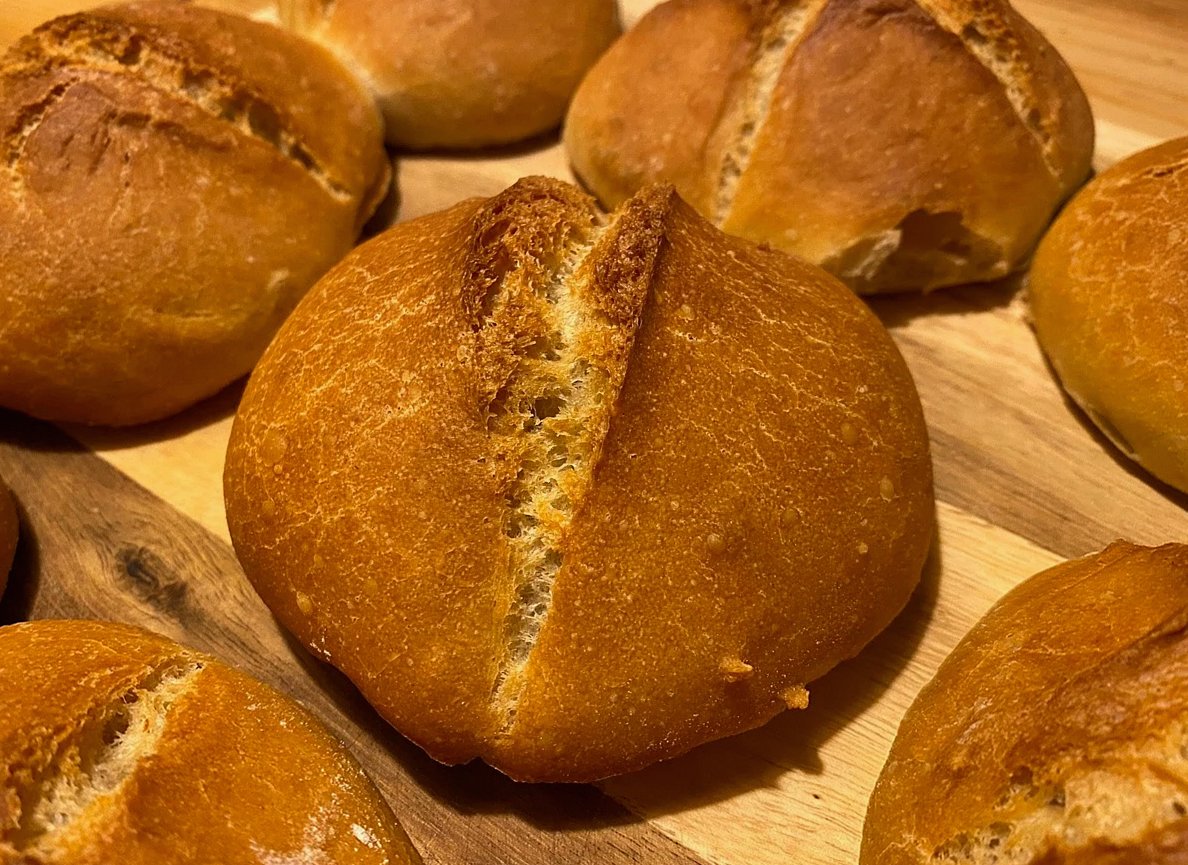
Scoring is the last thing you do before the loaf goes into the oven, and it is the thing most home bakers get wrong. A bad score does not ruin the bread. It still tastes the same. But it does affect how the loaf opens in the oven, and a loaf that tears unpredictably will have a denser crumb than one that opens cleanly along the score line. We cover scoring in every workshop we run, and the same mistakes come up every time.
The tool matters more than the technique
A sharp lame or a fresh razor blade is not optional. A dull blade drags through the dough surface rather than cutting it, which compresses the gluten and causes tearing. We replace our blades every two to three days during a heavy bake week. For home bakers who bake once a week, a blade should last two to three bakes before it starts to drag.
A bread knife does not work for scoring. Neither does a standard kitchen knife. The angle and the drag are wrong. If you do not have a lame, a single-edge razor blade held at an angle is a reasonable substitute.
Angle and depth
For a batard, the standard score is a single curved cut along the long axis of the loaf, made at roughly 30 to 45 degrees to the surface. A shallower angle produces a more pronounced ear. The flap of crust that lifts away from the loaf during baking. A steeper angle produces a more open, symmetrical bloom.
Depth should be around 5 to 7 millimetres. Too shallow and the score seals before the loaf has finished expanding. Too deep and the structure collapses. Move quickly and confidently. Hesitation causes dragging.
Cold dough scores better
This is the single most useful piece of advice we give in workshops: score the dough straight from the refrigerator, not after it has been sitting at room temperature. Cold dough is firmer, holds its shape under the blade, and gives you a cleaner cut. If you have been letting your dough warm up before scoring, try going straight from cold to oven and compare the results.
Scoring is one of those skills that improves quickly with repetition. If you come to a workshop, you will score your own loaf and see the result after baking. That feedback loop is hard to replicate from a written guide.